A Bear, a Tree, and a Community That Did Everything Right
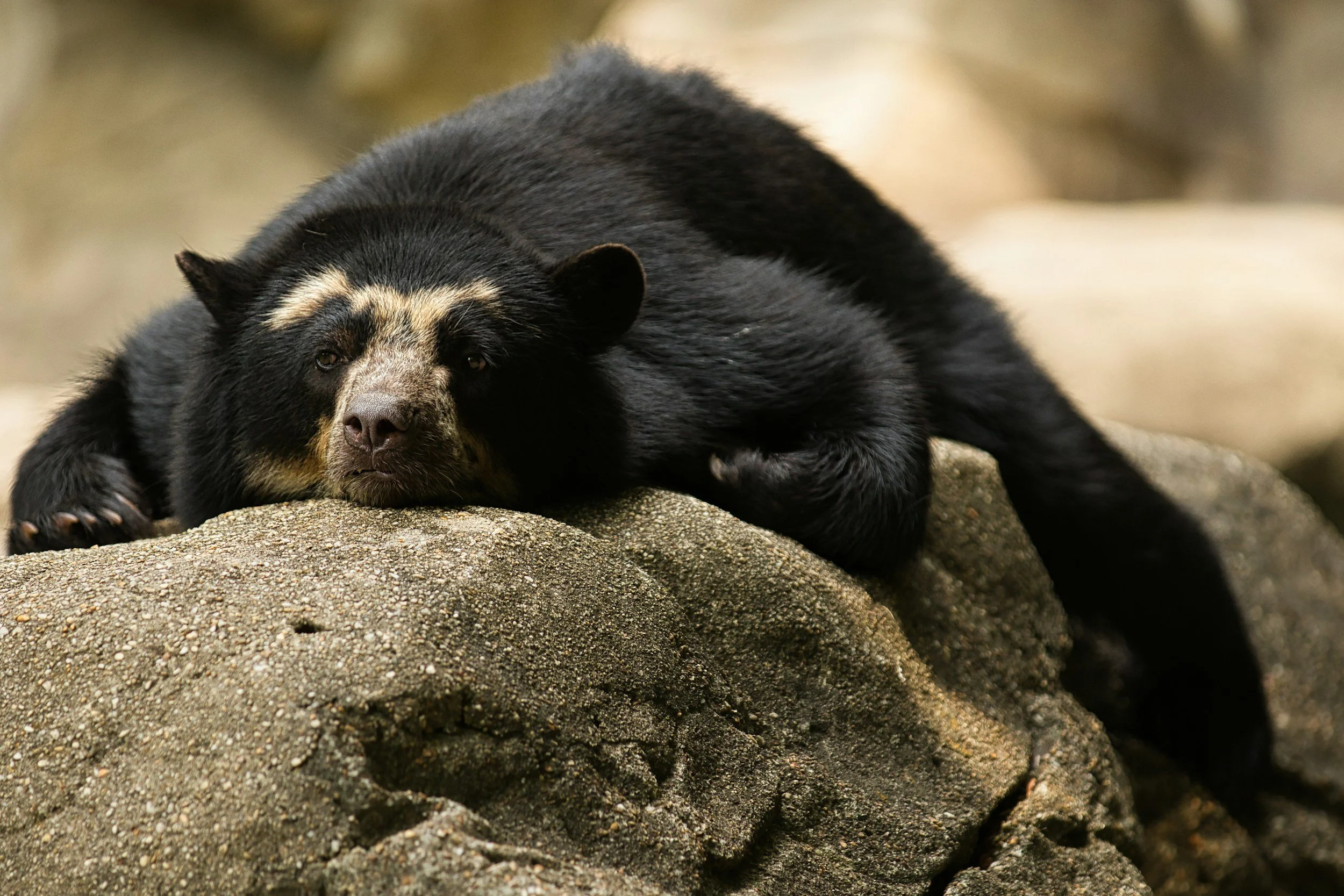
A few weeks ago, a young spectacled bear wandered into Cochas, a community a little further towards Otavalo, home to many of the Zuleta team, and did what any sensible bear might do when surrounded by curious humans: it climbed a tree and stayed there.
The people of Cochas had a decision to make. Some wondered whether they should try to coax it down themselves. But someone in the group had the good sense to say: no. We call the experts. So they rang the Gobierno Provincial de Imbabura, who put them through to Andrés Laguna, a bear specialist with the provincial government.
His advice was simple, if not exactly convenient: leave it exactly where it is, and don't go anywhere. Spectacled bears, the only bear species in South America, are famously mild-mannered and shy. They live mostly on berries, seeds and air plants, and are known to build a nest in a tree and simply wait, sometimes for days, for fruit to ripen. This one wasn't coming down with people underneath it. The community's job was to stay put, keep some noise going so it wouldn't slip past them in the night, and wait for the government team to arrive.
So they did. Led, fittingly, by the mother of Diana, who works with the Galo Plaza Lasso Foundation, the community of Cochas spent the night at the base of the tree. Not the most comfortable evening anyone's had, but an effective one.
The next day, the cavalry arrived, Imbabura's provincial wildlife team, alongside specialists from the Quito Zoo Rescue unit, who knew precisely how much tranquiliser the job required. The bear came down safely, was fitted with a tracking collar, and a call went out to Zuleta's resident biologist, Yan, to ask whether it could be released on our land.
What followed was, frankly, quite a sight: five vehicles, including a police car, making their way up to the San Pedro Valley, one of the areas on the estate where spectacled bears are most often seen, thanks to its protected forest. María head coordinator of the Foundation, was there to help supervise. The cage opened. The bear, eighteen months old, essentially still a teenager, shot off into the undergrowth without so much as a backward glance, and was gone.
It's a lovely story on its own, but what makes it worth telling isn't really the bear. It's Cochas. Not so long ago, an animal like this turning up near a community would likely have ended very differently. Instead, a group of people gave up a night's sleep, followed the advice of experts to the letter, and made sure a young bear got a second chance in the wild rather than becoming a problem to be solved on the spot.
That's what conservation looks like on the ground, most of the time. Not a grand gesture, just a community that knew exactly what to do, and did it.
Well done, Cochas.